15 September 2026 Kolej Dato’ Onn Jaafar, Universiti Teknologi Malaysia
The Stingless Bees Talk, Hands-on Workshop & Agricultural Experience at Kolej Dato’ Onn Jaafar (KDOJ) brought students together to explore sustainability through practical learning. Led by Dr. Mohd Amri bin Md. Yunus, the programme connected stingless bee education with internationalisation at home and the use of technology in agriculture.
Activities began at around 9.00 am with introductions and an ice-breaking session. International students from Ethiopia, China, Iran, Bangladesh, and Nigeria joined a shared discussion about stingless bees in their home countries. The students had not previously been aware of these bees in their own countries, making the exchange an opportunity for everyone to learn together. It also opened up possibilities for further discovery, conservation and potential beekeeping ventures when they return home.
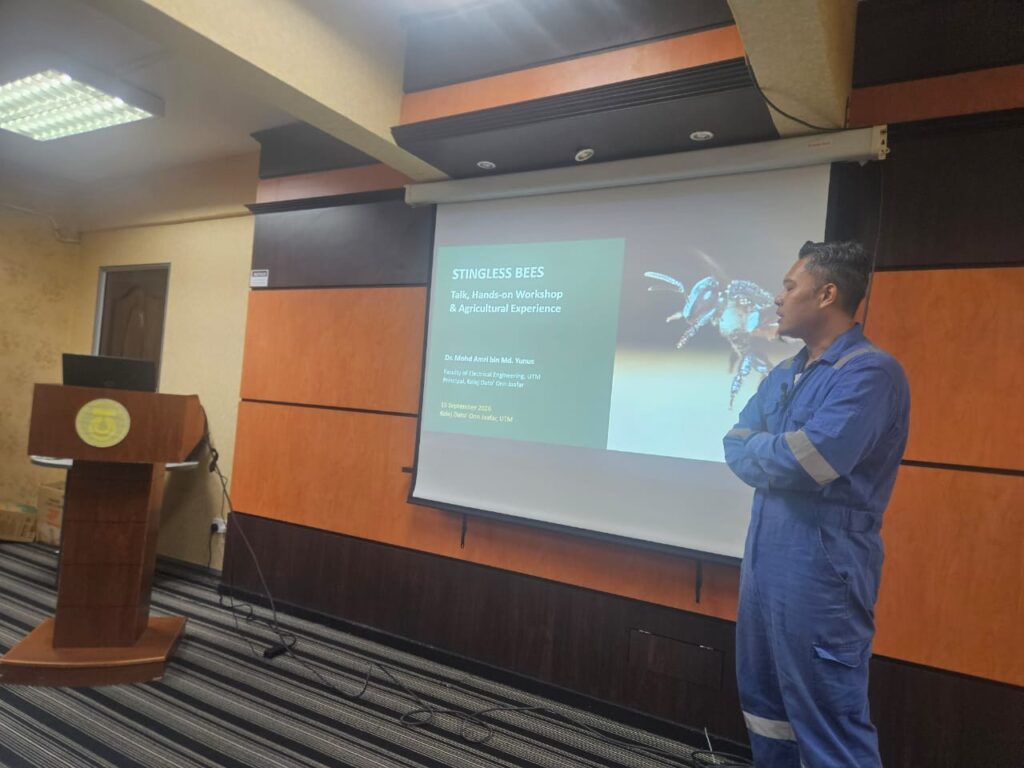
This exchange gave internationalisation at home a practical meaning. Students could connect their different national backgrounds with a common environmental topic while learning together on the UTM campus. Dr. Amri then delivered a brief 16-minute introductory lecture before the group moved outdoors for field learning.
Dr. Amri delivers the opening talk and introduces the stingless bee workshop before the outdoor activities
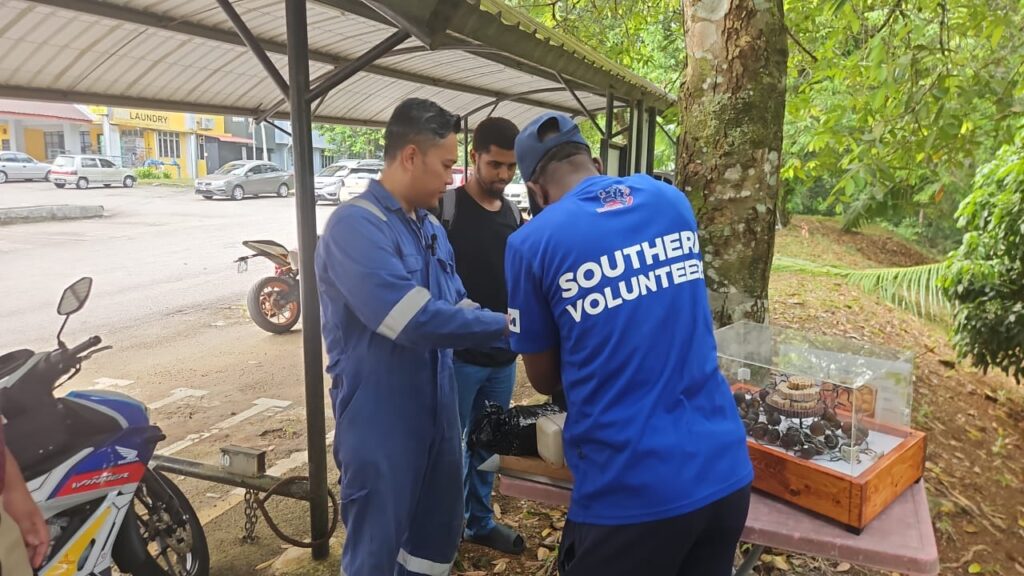
Outdoors, the lesson continued with a 3D-printed model that helped explain stingless bee biology and nest organisation. Dr. Amri used the model to make structures that are normally hidden inside a hive easier to understand. Students could relate the explanation to a physical representation before observing the actual hive environment. The activity showed how 3D printing can support agricultural education by making unfamiliar biological concepts more accessible.
Dr. Amri explains stingless bee biology and nest structure using a 3D-printed teaching model
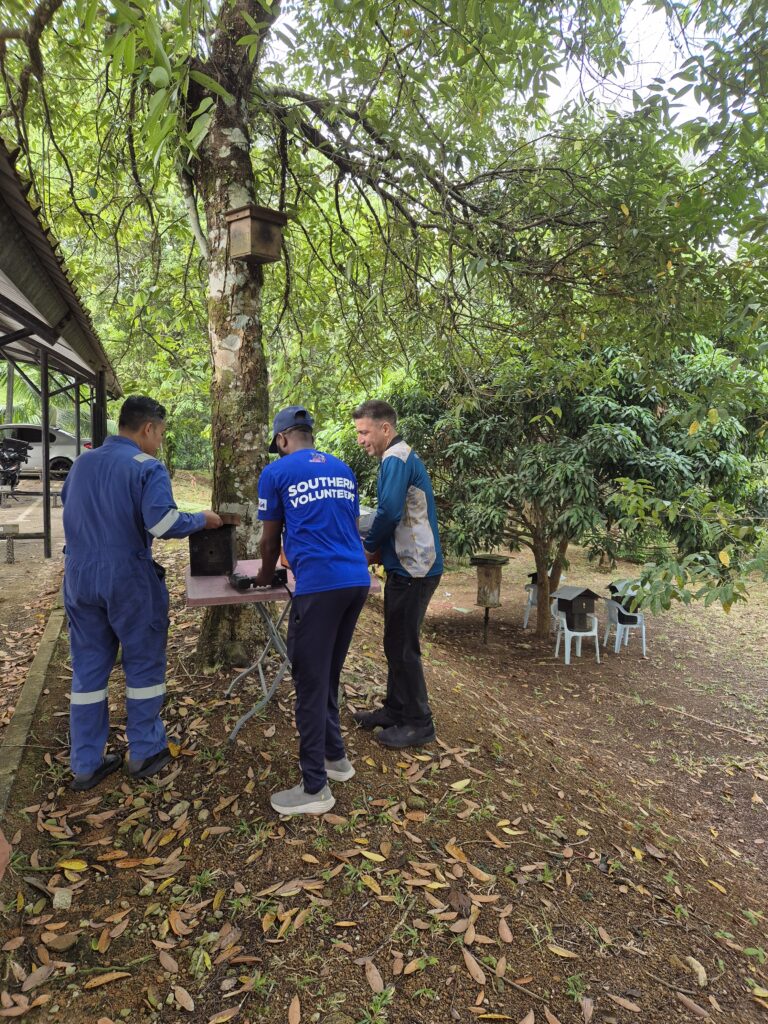
The group next examined a bee trap attached to a tree. Dr. Amri explained its purpose and how trapping relates to establishing and managing stingless bee colonies. Seeing the trap in its outdoor setting connected the earlier explanation with a practical example. The discussion encouraged students to consider how their own surroundings might offer opportunities to observe local bees and learn more about their habitats.
Dr. Amri explains stingless bee trapping beside the tree-mounted trap, linking the demonstration with the surrounding habitat.
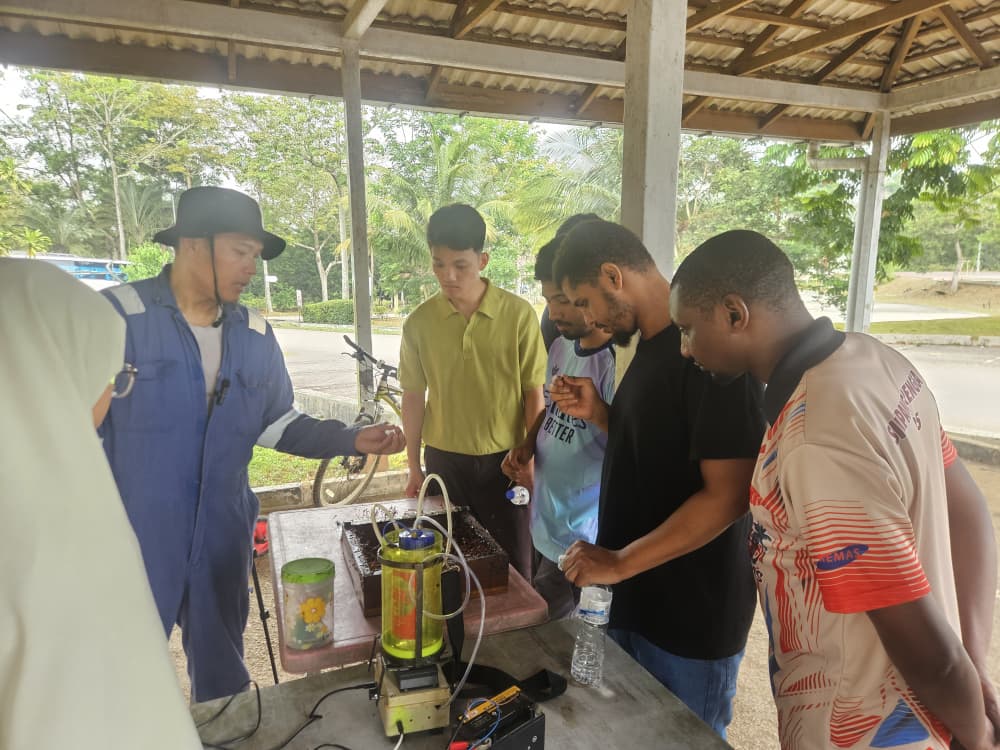
At the next station, Dr. Amri demonstrated honey harvesting using a pump. Students gathered around the hive and equipment to follow the explanation closely. The demonstration connected colony care with the practical use of technology and introduced the importance of careful handling during honey collection where everyone had the opportunity to harvest and taste stingless bee honey. Overall, everyone enjoyed the exotic taste of stingless bee honey which can be explains like fruity and sourish punch after taste. It also showed how relatively simple equipment can support hands-on learning about agricultural production.
Students observe Dr. Amri’s explanation of honey harvesting using a pump
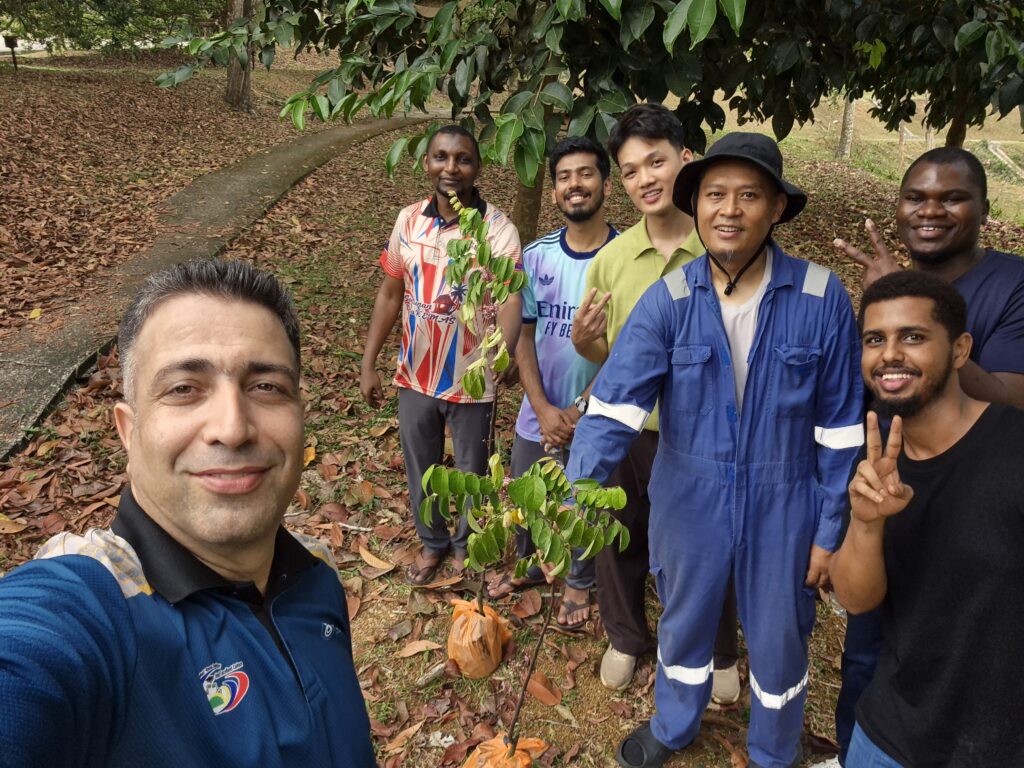
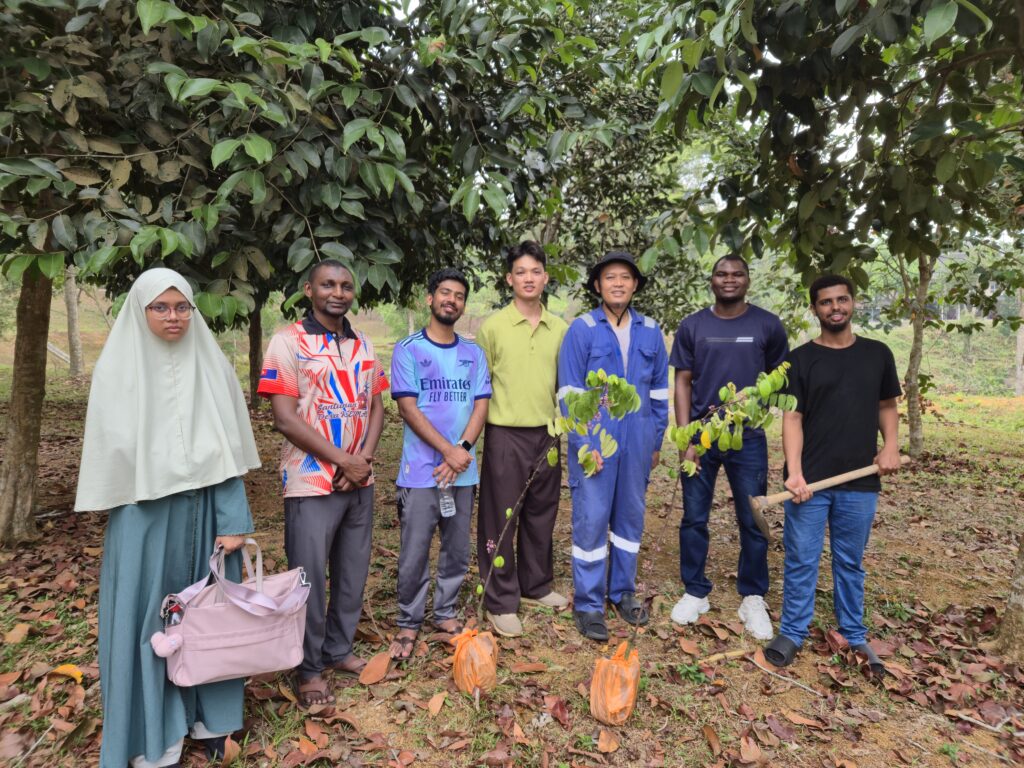
The field session continued with the programme’s tree-planting tradition. Dr. Amri and the students came together around starfruit saplings, linking the care of bees with the plants that support them. This activity gave sustainability a visible, practical expression: learning about bees also means taking responsibility for their surrounding environment.
Dr. Amri and students mark the tree-planting activity with starfruit saplings, continuing the tradition of planting for bees.
The programme concluded punctually at 12.00 noon with lunch. The hope is that students will continue this sustainability approach by caring for the planting, remaining involved in bee-related activities and sharing what they have learned with others. Their curiosity can also encourage further exploration of stingless bees in their home countries, extending the value of internationalisation at home beyond the UTM campus. Through continued participation, students can help sustain an approach that brings environmental responsibility and practical innovation into everyday learning.