
JOHOR BAHRU | 29 October 2026
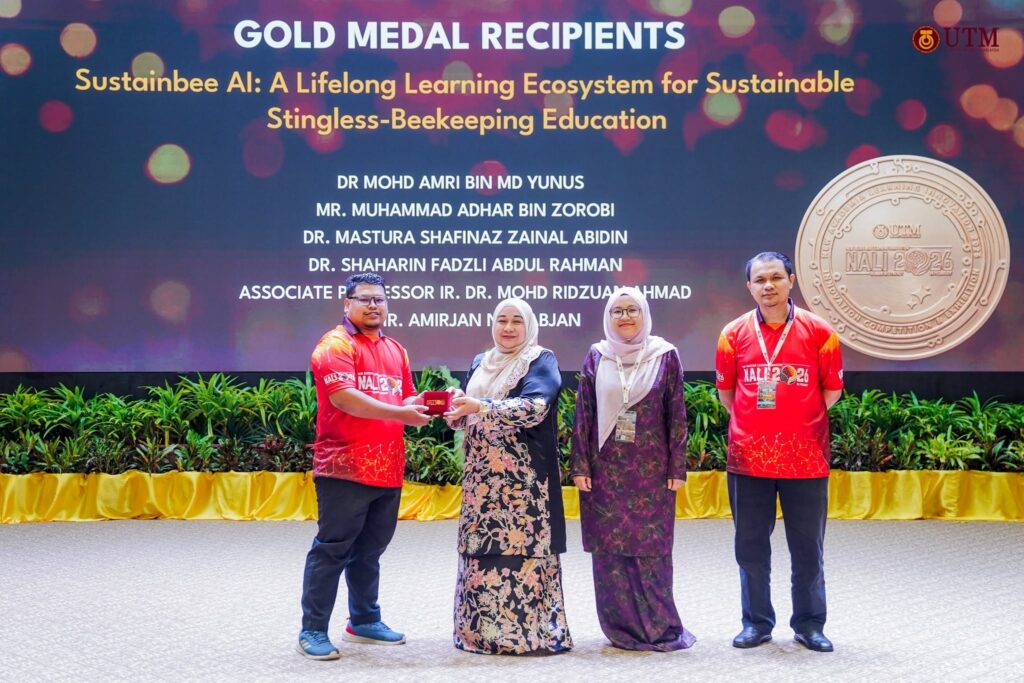
Kolej Dato’ Onn Jaafar (KDOJ), Universiti Teknologi Malaysia (UTM), received a Gold Award at the New Academia Learning Innovation (NALI) 2026 Innovation Competition and Exhibition for its entry, “Sustainbee AI: A Lifelong Learning Ecosystem for Sustainable Stingless-Beekeeping Education.”
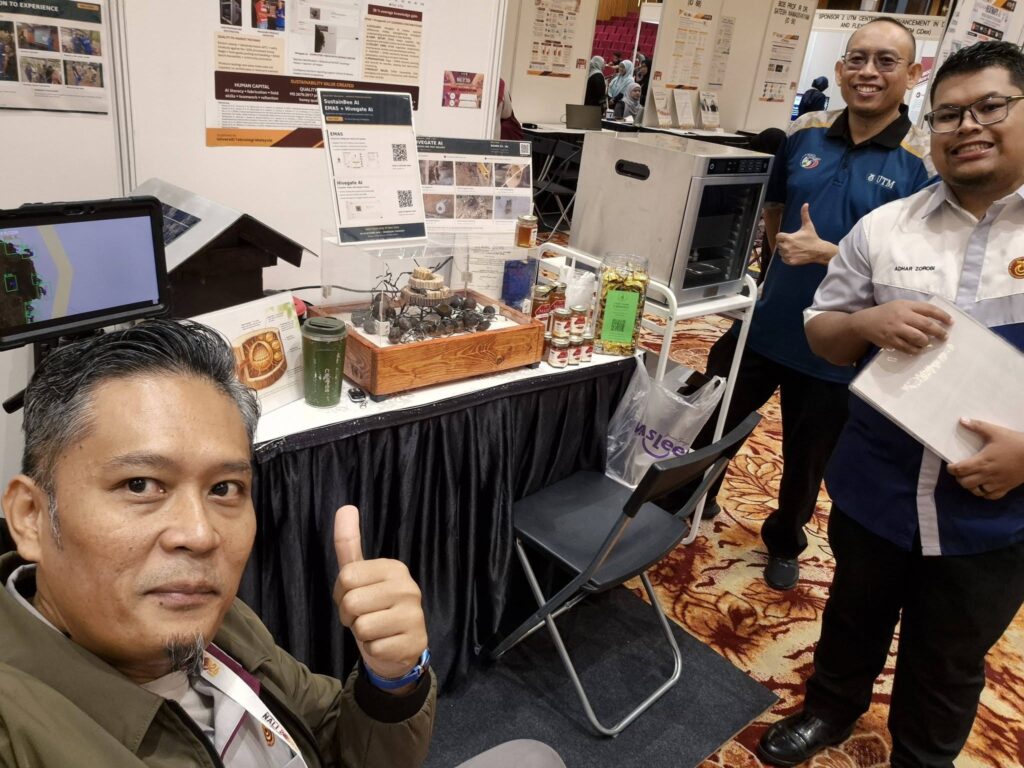
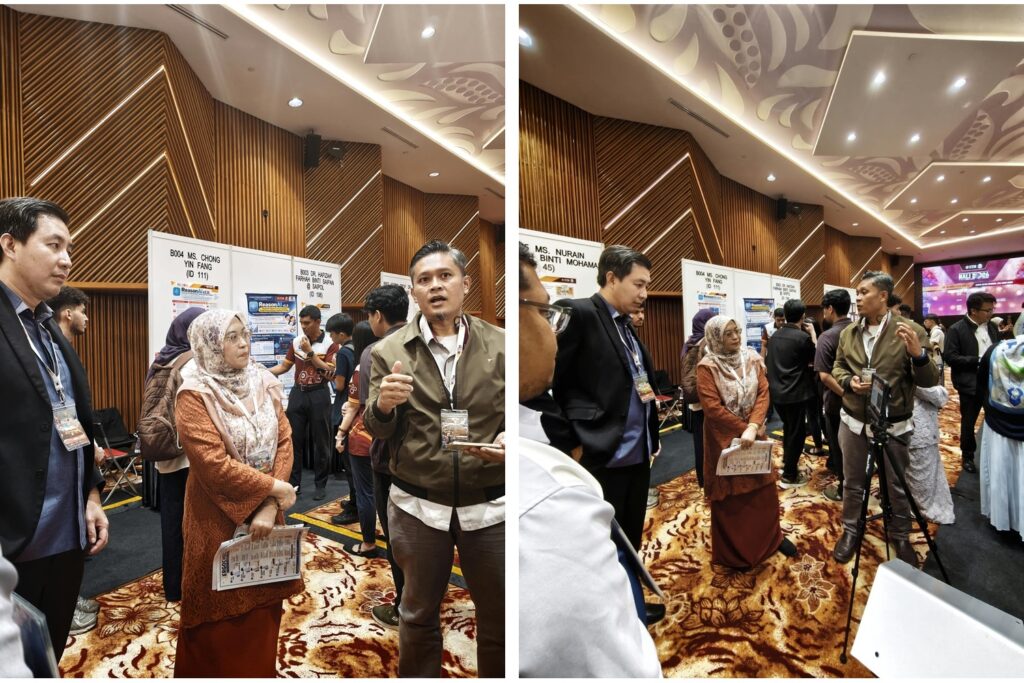
Dr. Mohd Amri bin Md. Yunus, Principal of KDOJ, attended the exhibition together with Muhammad Adhar bin Zorobi and Mr. Zairil. The team brought KDOJ’s stingless-bee learning activities to the exhibition floor through physical teaching models, honey-related equipment and demonstrations of EMAS and HiveGate AI.
Held on 28 and 29 October 2026 at Dewan
Sultan Iskandar, UTM Johor Bahru, NALI 2026 was organised by the Centre for
Digital and Flexible Learning Advancement (UTM CDex) under the theme “Human-AI
Synergy in Pedagogy.” The KDOJ entry connected this theme with learning that
continues through observation, care and reflection after a workshop ends.
Learning through the KDOJ exhibition booth
The booth showed how stingless bees can connect environmental learning with practical technology. A three-dimensional teaching model made the normally hidden structures of a nest easier to discuss, while honey products and dehydration equipment linked colony care to harvesting and post-harvest handling.
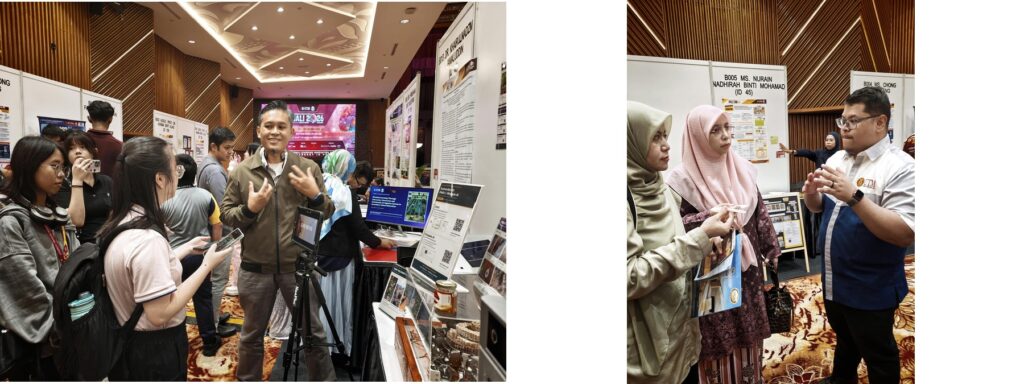
Across the exhibition, Dr. Amri, Muhammad Adhar and Mr. Zairil engaged visitors through explanations and demonstrations. Conversations at the booth covered the bees themselves, the learning activities and the role of digital tools in supporting continued participation.
Faculty visit and judging session
Among the visitors was Prof. Dr. Jafri bin
Din, Dean of the Faculty of Electrical Engineering, UTM. His visit provided an
opportunity for the team to explain how engineering tools can support
stingless-bee education and community learning.
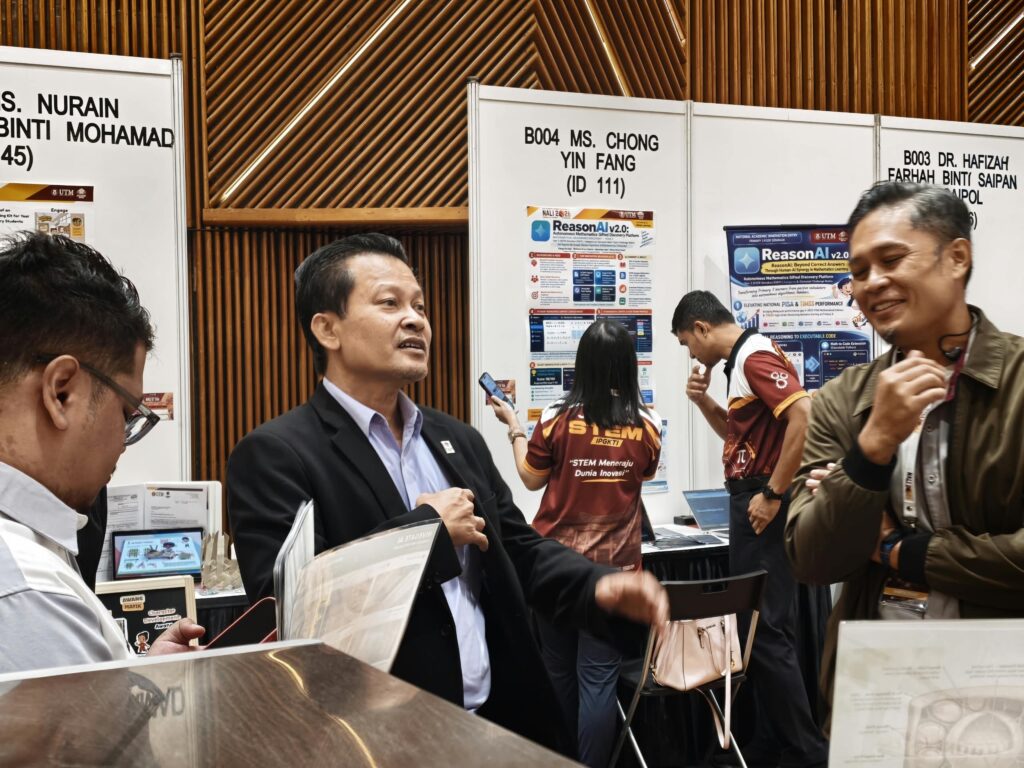
During the judging session, Dr. Amri presented the SustainBee AI approach and its supporting exhibits. The presentation connected practical learning with digital documentation, showing how participants can continue to apply what they have learned while caring for real colonies.
EMAS records that make participation visible
EMAS, the Electronic Meliponini Advanced System, supports organised hive records. The displayed examples included a hive profile, species information, colony observations and harvest history, with fields for information such as temperature, humidity, honey yield and moisture content when measured.
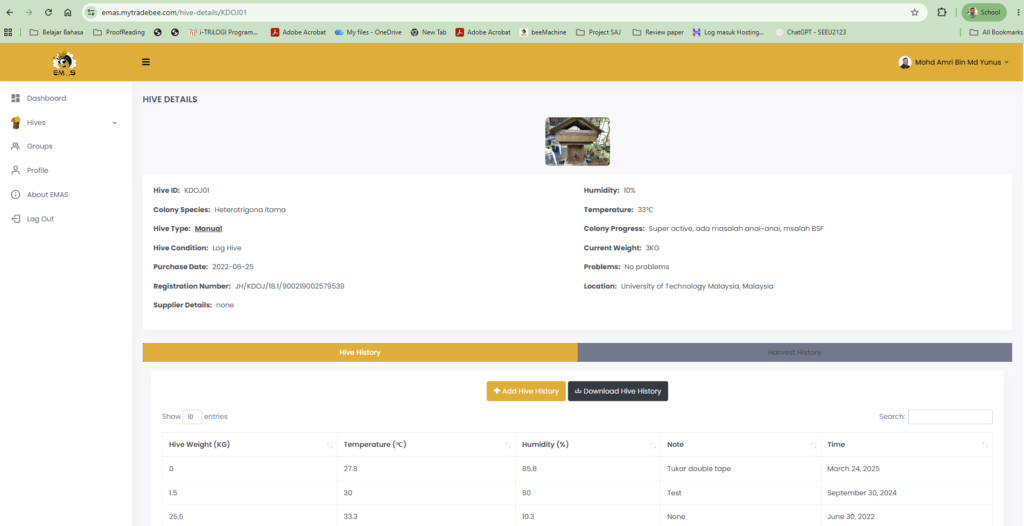
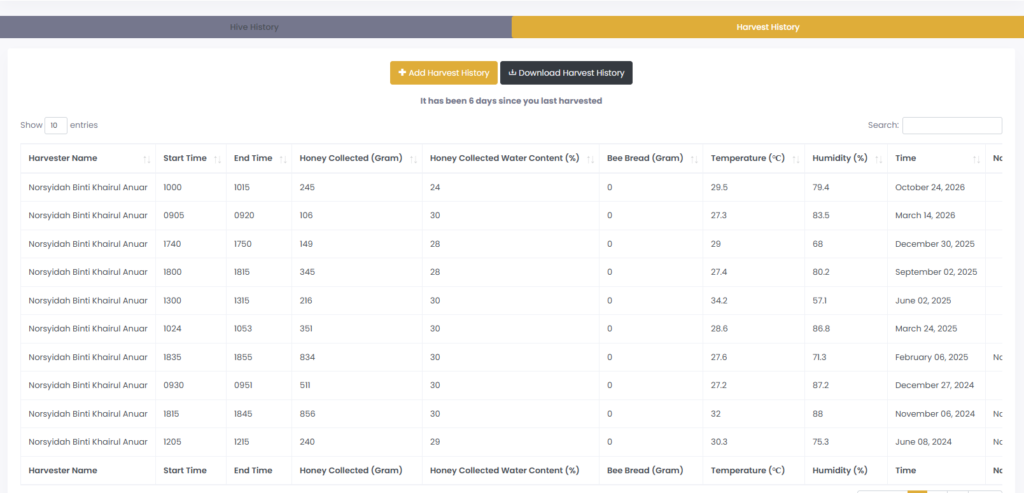
Figure 6. Examples of the EMAS hive profile and harvest history. Dated observations and harvest records provide a basis for reviewing care and participation over time.
These records can also provide behavioural evidence relevant to a learner’s attitude towards responsibility and care. Repeated observations show whether a participant returns to the hive, records its condition and follows up on problems. A dated history allows educators or programme coordinators to review participation beyond attendance at a single training session.
For this purpose, coordinators could review the proportion of expected weekly records completed, the completeness of observations, the documentation of each harvest and follow-up actions after a problem is noted. These are proposed indicators of engagement; EMAS entries alone do not directly measure a person’s attitude or prove good colony care. Field observations, participant reflections and short attitude questionnaires can strengthen the assessment.
A missing entry should prompt contact with the participant to establish whether support, clarification or better access is needed. The value of the record lies in helping people act on what they observe.
HiveGate AI for species identification and bee counting
HiveGate AI adds image-based species identification to the learning process. Users upload a bee photograph and review the model’s suggested species and confidence scores. The example displayed includes low-confidence suggestions, making it a useful reminder that AI outputs require human review and, where necessary, expert confirmation.
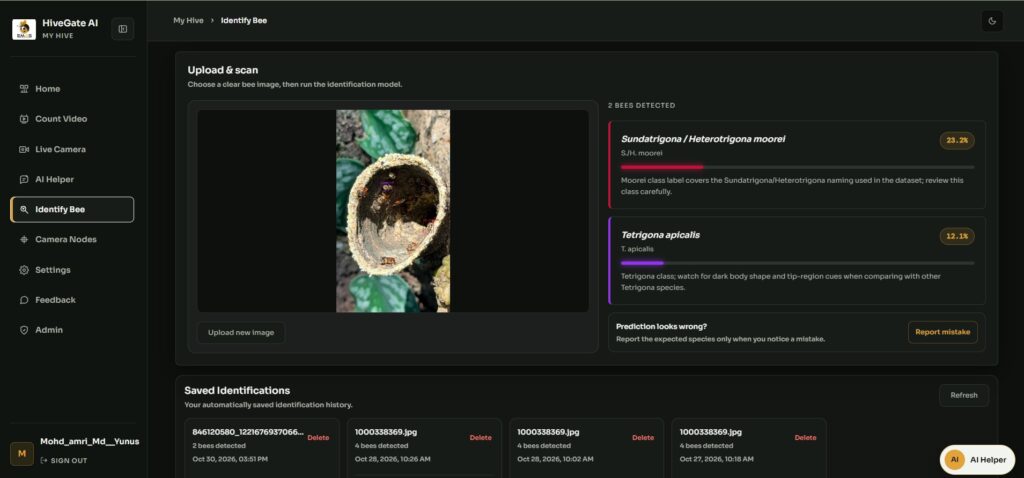
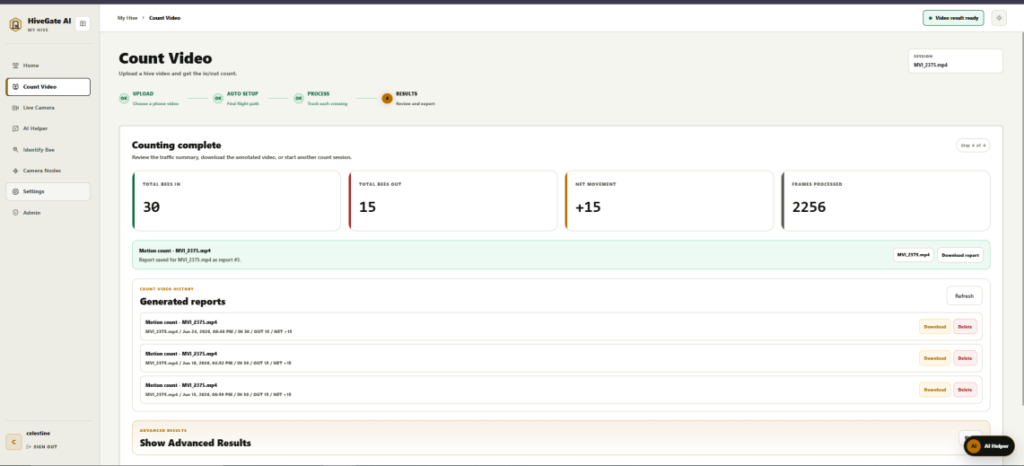
The system also supports video-based counting of bees entering and leaving a hive. Detection, tracking and directional crossing logic help turn entrance activity into IN and OUT records. Comparing observations made under similar conditions can help users notice changes that warrant closer inspection; entrance traffic alone is not a complete assessment of colony health.
Extending support beyond training and hive handovers
The importance of continued care is reflected in a personal account shared with Dr. Amri by a fellow stingless-bee practitioner. Recalling village projects associated under a certain programme around 2014, the practitioner described training followed by allocations of about 100 hives per village, and reported extensive colony losses within roughly two years at locations they had observed. This is an anecdotal recollection, rather than an independently verified assessment of the programme, but it highlights a concern about maintaining support after the initial handover.
To address that concern, Dr. Amri proposes that agencies and contributors, including the goverment and private agencies, consider making EMAS reporting a condition of future stingless-bee grants or hive contributions. Under the proposal, participants would record an inspection for each supported hive at least once a week and document every harvest. Weekly monitoring would continue even when no honey is harvested. Furhermore the hive details such as suppliers and outcomes are traceables over the time through proper records.
Inspection entries would record colony condition, problems observed and actions taken, with measurements where available. Harvest entries would include the date, yield and moisture content when measured. Coordinators could then review the records, contact participants when updates stop or problems appear, and arrange advice or a site visit. This would support follow-up and accountability; its effect on colony survival would still need to be evaluated.
The Gold Award recognises an educational approach that links technology with sustained human involvement. For KDOJ, the next opportunity is to translate that recognition into learning and community partnerships in which participants continue to observe, record and care for their colonies.
The project also acknowledges the contributions of Dr. Mastura Shafinaz Zainal Abidin, Dr. Shaharin Fadzli Abdul Rahman, Associate Professor Ir. Dr. Mohd Ridzuan Ahmad and Dr. Amirjan Nawabjan, whose names appear among the contributors recognised on the award presentation screen.