23 November 2026 | Kolej Dato’ Onn Jaafar | UTM Johor Bahru
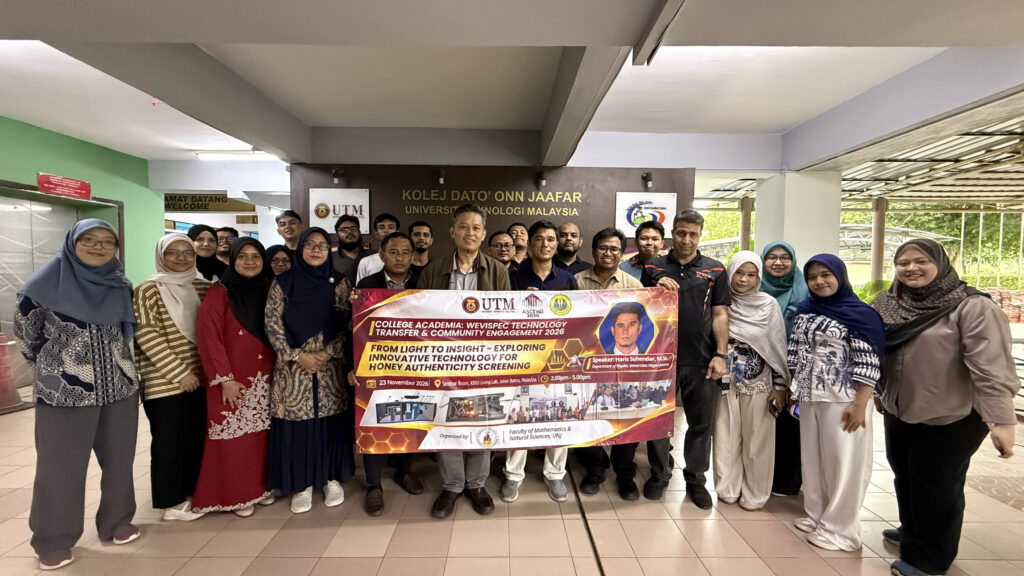
JOHOR BAHRU, Nov 23 – Kolej Dato’ Onn Jaafar (KDOJ), Universiti Teknologi Malaysia (UTM), strengthened its academic collaboration with Universitas Negeri Jakarta (UNJ), Indonesia, through a College Academia, and Intellectual Discourse programme featuring WeViSpec technology transfer. Held at the KDOJ Living Lab Seminar Room, the programme brought together approximately 30 participants, including representatives of the Tenggaroh community, students and the UNJ delegation.
The College Academia: WeViSpec Technology Transfer & Community Engagement 2026 programme was delivered through collaboration between KDOJ and the Community Service Team from UNJ’s Faculty of Mathematics and Natural Sciences (FMIPA). Themed “From Light to Insight – Exploring Innovative Technology for Honey Authenticity Screening”, the programme introduced students and community participants to practical applications of spectroscopy research.
The College Academia and Intellectual Discourse approach provided a setting for learning beyond the classroom by bringing researchers, students and community members together. KDOJ Principal, Dr. Mohd Amri bin Md. Yunus, delivered remarks during the programme, which connected academic knowledge with practical concerns in honey production.
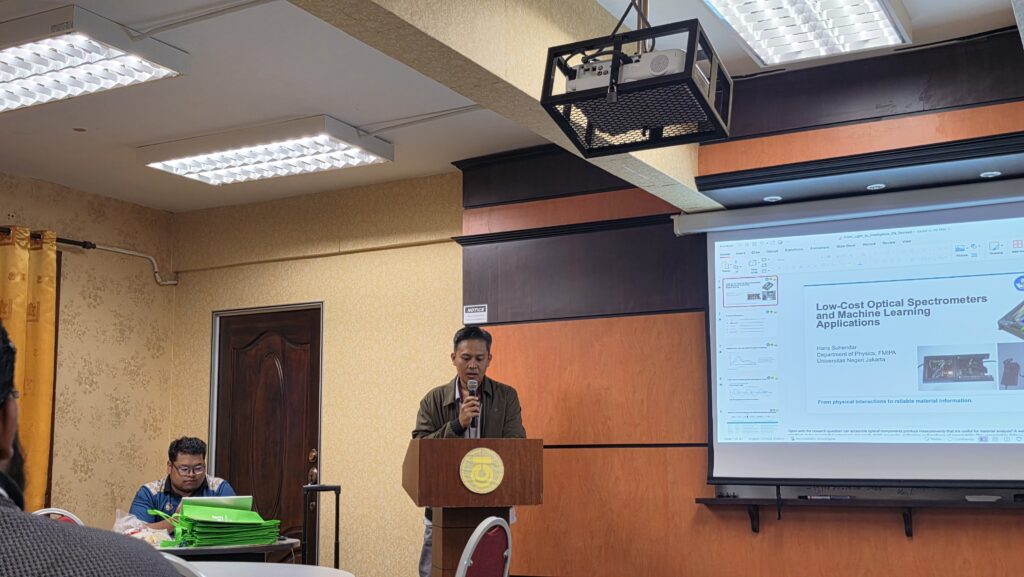
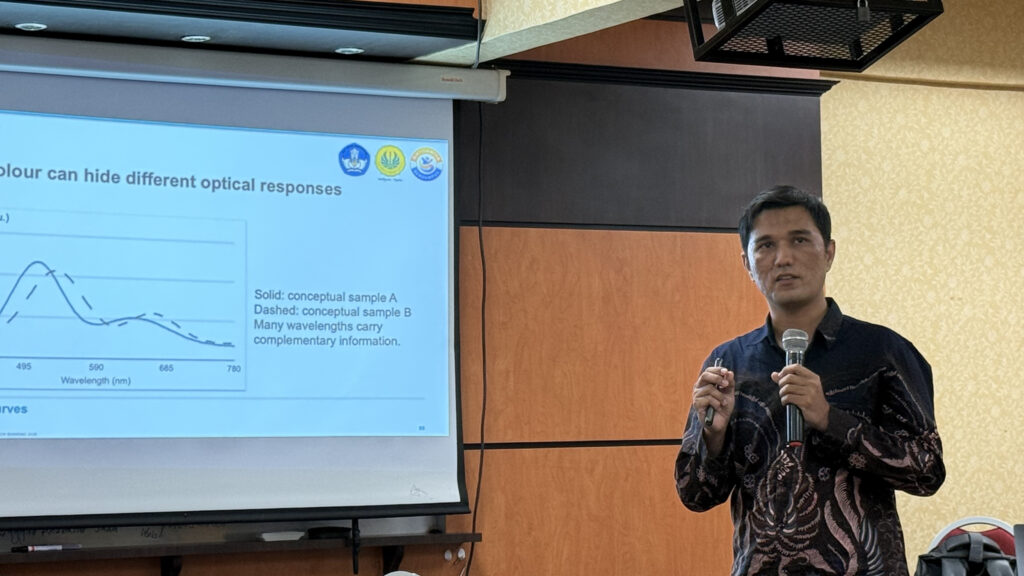
The knowledge-sharing session was led by Mr. Haris Suhendar, M.Sc., from the Department of Physics, FMIPA, UNJ. He discussed how light interacts with materials, the principles of low-cost optical spectrometers and the use of machine learning to analyse spectral data. Participants were introduced to how information across different wavelengths can help researchers examine the characteristics of samples, including honey.
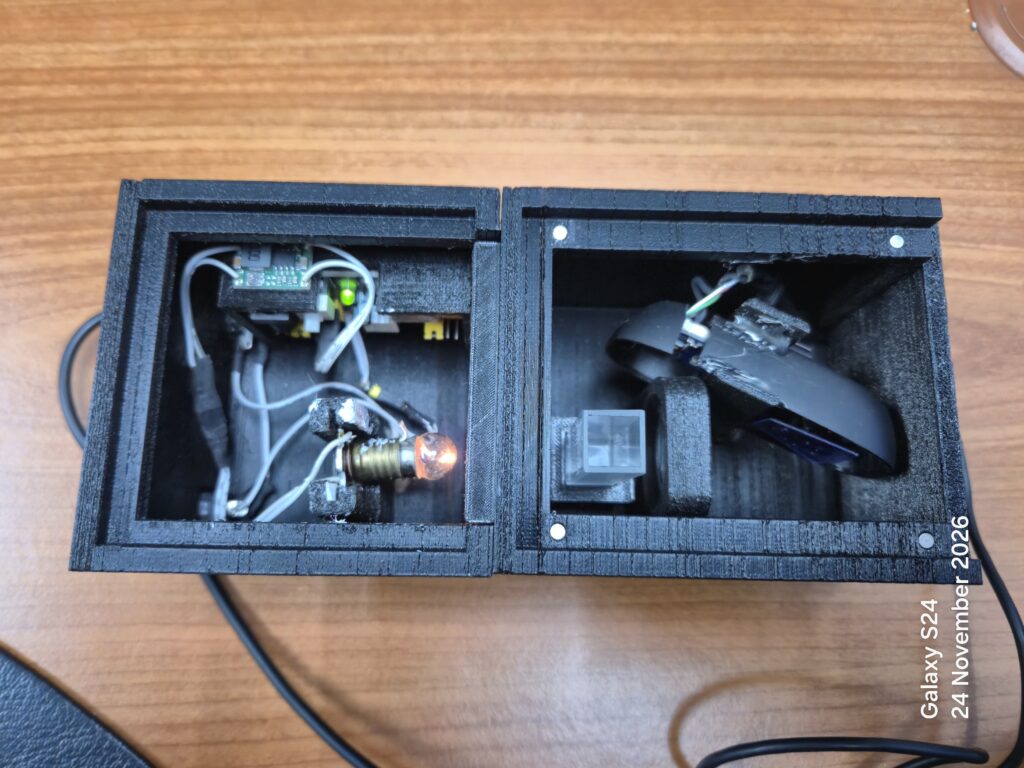
team using a webcam as its sensor and a DVD-based diffraction grating. It collects spectral information to support preliminary screening for honey adulteration with added sweeteners. The session also highlighted the importance of calibration and careful data interpretation, as the appearance or colour of honey alone is insufficient to establish its authenticity.
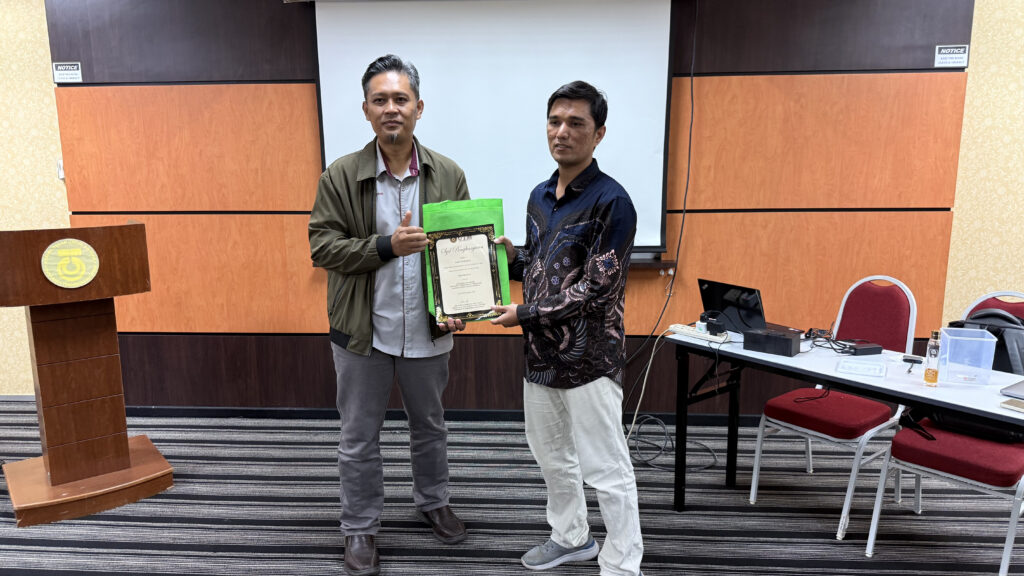
The programme also featured the handover of a WeViSpec device to KDOJ, received by KDOJ Principal, Dr. Mohd Amri bin Md. Yunus. The device will support learning, training and applied research at KDOJ Living Lab, particularly the exploration of spectroscopy for preliminary honey authenticity screening.
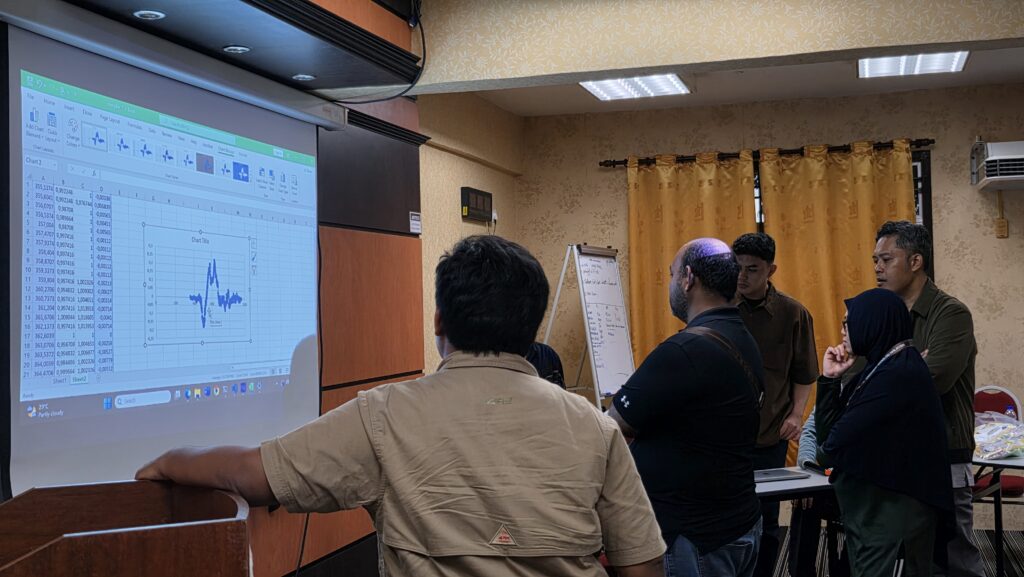
Through the demonstration and practical discussion, participants were introduced to the device components, calibration, sample measurement and spectral data processing. They had the opportunity to examine the data display and discuss how measurement principles, instrument operation and the interpretation of analytical results are connected.
The participation of the Tenggaroh community brought producers’ perspectives into discussions on honey authenticity and consumer confidence. For students, engagement with community members and UNJ researchers provided exposure to scientific applications in real situations and the importance of integrity when handling data and communicating product information.
In appreciation of his contribution, the KDOJ Principal presented Haris Suhendar with a certificate of appreciation.
The collaboration creates opportunities for continued use of WeViSpec as a college learning facility and for further joint research between UTM and UNJ. Combining technology transfer with knowledge sharing and community participation is expected to help participants better understand and apply scientific approaches to honey assessment.
Based on its activities and purpose, the programme relates to the following Sustainable Development Goals.
| SDG | Goal | Connection to the programme |
|---|---|---|
4 |
Quality Education |
Knowledge sharing and practical exposure to spectroscopy for students and community participants. |
8 |
Decent Work and Economic Growth |
Building knowledge that can support honey producers’ capabilities and science-based entrepreneurship. |
9 |
Industry, Innovation and Infrastructure |
Transfer of an affordable optical instrument for learning and exploration of applied research. |
12 |
Responsible Consumption and Production |
Awareness of honey authenticity, product information integrity and the use of data for preliminary screening. |
17 |
Partnerships for the Goals |
Malaysia–Indonesia collaboration connecting UTM, UNJ, students and the Tenggaroh community. |